
Universities of Wisconsin, reform thyself!
The board of directors for the Wisconsin Association of Scholars delivered the following letter to the UW System Board of Regents on January 15, 2026
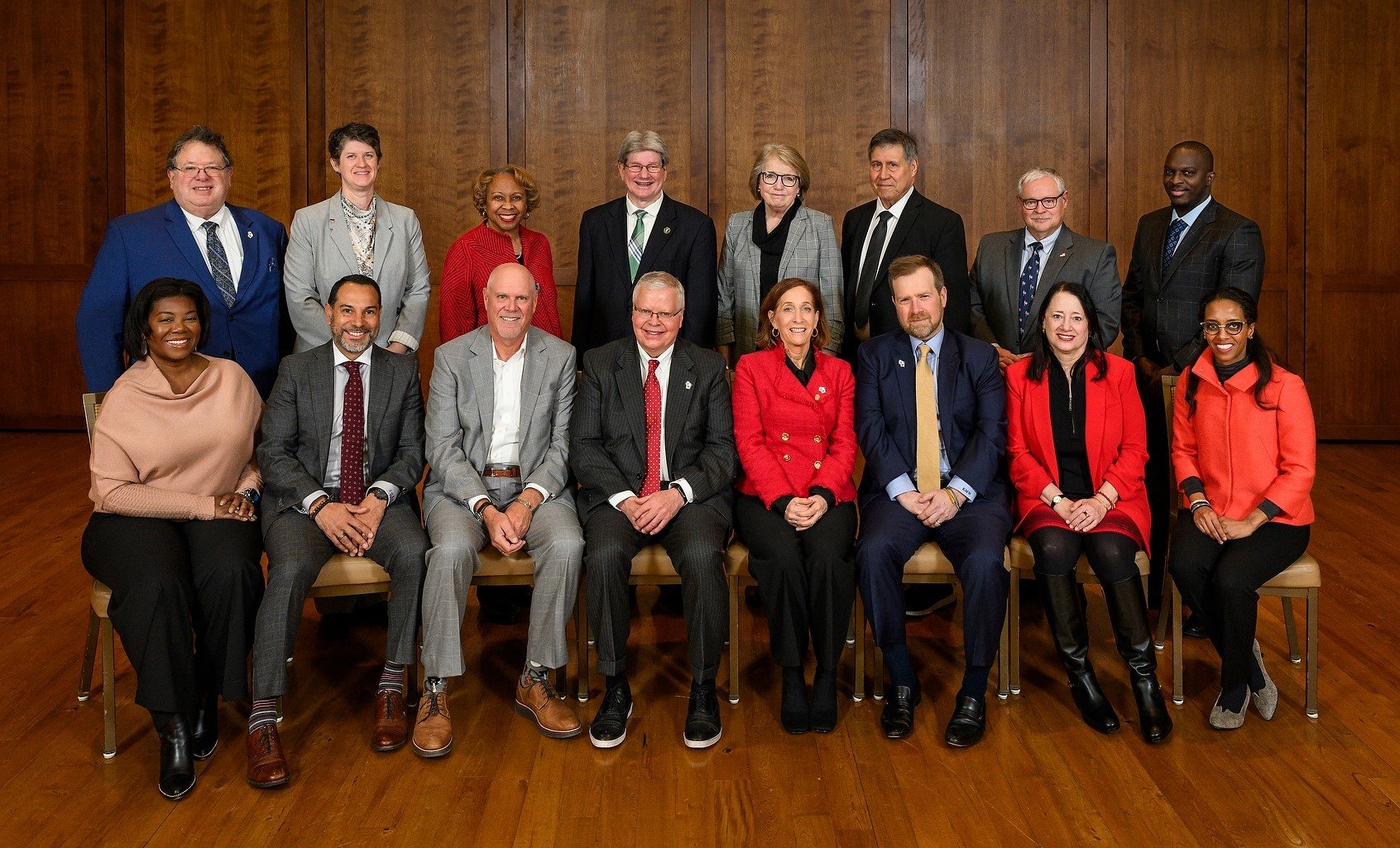
February 2025 Portrait of the UW System Board of Regents. Standing (L-R): Timothy Nixon, Jill Underly, Joan Prince, Jim Kreuser, Cris Peterson, Edmund Manydeeds III, Mark Tyler, Desmond Adongo. Seated (L-R): Angela Adams, Héctor Colόn, Jack Salzwedel, UW President Jay Rothman, Regent President Amy B. Bogost, Regent Vice President Kyle Weatherly, Karen Walsh, Haben Goitom. Not pictured: Audrey Jenkins, Ashok Rai, Amy Traynor.
To the Regents of the Universities of Wisconsin:
We share the same goal: a vibrant, world-class university that serves Wisconsin and the Nation both in outstanding teaching and research. We respect your contributions to that effort. We realize the challenges and structural barriers you face.
We also believe that those challenges present opportunities and that your role in capitalizing on those opportunities is essential. Universities are at a turning point, facing financial and demographic challenges, as respect for universities has plummeted. Now more than ever it is incumbent on you to shape the curriculum, attract and expend resources in a prudent manner, and create a campus environment in which all students and faculty are free to express themselves.
We do not want federal or state control of the day-to-day operations of the UWS. But as a public institution, it is necessary to work with government to insure the future of the UWS. As with many aspects of life, balance is the key. The UWS is unbalanced in its intellectual diversity – it is stuck in the era of discredited wokeness. The result is public skepticism by the people of Wisconsin about the educational product of the UWS.
What to do? We offer two suggestions: First, emulate reforms and programs implemented at several state universities (e.g. Ohio State’s Salmon Chase Center for Civics, Culture, and Society and similar programs at Florida, Florida State, Texas, North Carolina, Arizona State, and Tennessee) and tailor their successes to revitalize the Wisconsin Idea. The new humanities building on the UW Madison campus provides the perfect opportunity to turn one of the most unbalanced departments on the campus (sometimes referred to as a pit of vipers) into a showpiece of classical education.
A concrete action is inviting Professor Ryan Owens (formerly of the UW–Madison law and political science faculties, now at Florida State) to address you on what is happening at the cutting edge of higher education, particularly at it relates to civic and classical education. Other outstanding leaders include Professor Dunn of Tennessee (Institute for American Civics, the product of near unanimous bipartisan support in the legislature) or scholars from the Jack Miller Center of Pennsylvania. The University of Texas is attracting world class faculty – and money – with its approach to a new school based on classical thought. Significant funding is at stake: the US Department of Education favors schools with independent civics institutes when they apply for grants. Wisconsin must take advantage of these opportunities.
A second decisive action is to adopt key elements of the “Compact” that the federal government has put on the table. In short, universities receive favorable treatment if they follow the roughly dozen stipulations outlined in the Compact. A thoughtful look at the stipulations reveal that they are not onerous, but rather, encourage traditional elements of a university education and do not cede control of the university to the federal government. Favorable treatment clearly means more money from the federal government and diminishes the probability of lawsuits against the UWS.
The key suggestion of the Compact is to maintain “equality in admissions” or, in other words, stop using preferences based on race, ethnicity, or sex. The Supreme Court recently said as much in the Harvard admissions case. Other stipulations include items like:
Commit to “maintaining a vibrant marketplace of ideas.”
Prohibit “incitement to violence including calls for murder or genocide.”
Nondiscrimination in faculty and administrative hiring.
Control costs by “eliminating unnecessary administrative staff.”
Commit to “anti-money laundering” and disclosing “foreign gift” obligations.
Adopt “clear and consistent disciplinary standards that apply equally to students, faculty, and staff.”
Institutional neutrality in which university employees “abstain from actions or speech relating to societal and political events except in cases in which external events have a direct impact upon the university.”
Substantial adoption of these and other stipulations will not undermine autonomy of the university or weaken the academic freedom of students or faculty. Many are already UWS policy, or direct that existing law be followed.
Real change is possible. Wisconsin can follow Ohio State and other major institutions of higher learning. The price of not seizing these opportunities will be diminution of the UWS and a generation of young people who will leave school with a second-rate education and gross misconceptions about their country and culture.
Sincerely yours,
Benjamin Whitcomb
President, Wisconsin Association of Scholars and Professor at UW–Whitewater